Markets
Different Markets, Same Edge: The Golden Era Of Botting
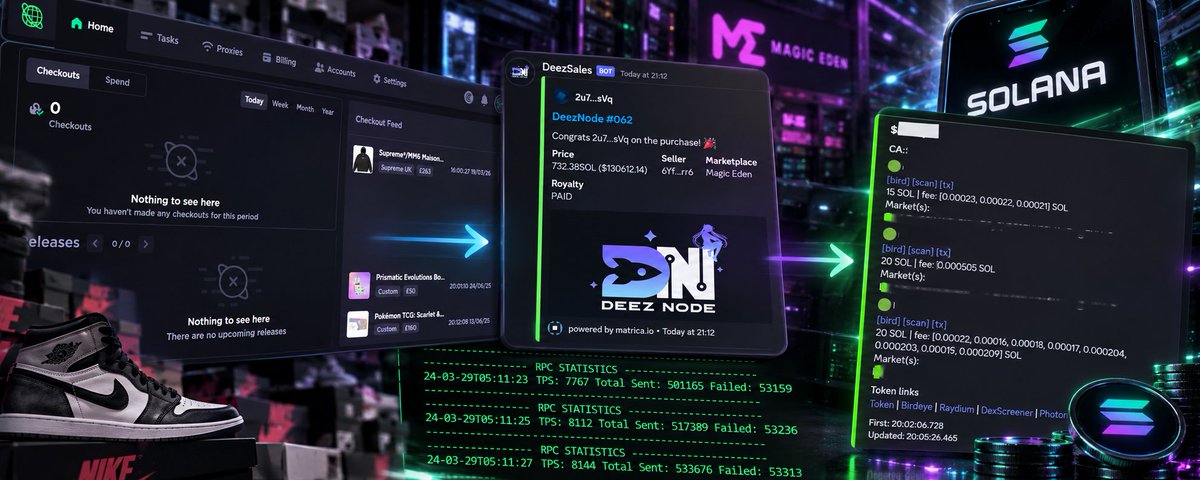
Different markets, same game. Find an edge that already exists, understand it better than most, then scale it as hard as you can.
First it was sneakers. Then NFTs. Then Solana.
I haven’t tweeted in years. Then @nickbruhman’s piece on Sneaker Twitter brought a lot of it back. The Discords. The monitors. The people treating a drop like a contact sport. His writing captures that world better than I could, and the replies made something obvious: a huge chunk of crypto came up through those same servers.
Myself included.
This isn’t a redo of Nick’s story. It’s what came after for me and many others.
From sneaker botting in 2018–2021 to sniping on Solana from late 2023 through 2025. Same instincts. Different rails. Different tools. Different competition.
Here’s how the game changed and how the people from those Discords ended up on-chain.
The Sneaker Era
I got into sneaker botting around 2018. By 2020, it had become a pretty serious operation.
The biggest edge was scale. If one setup was working, you wanted five. Then ten. More bots, more servers, more accounts, more cards and more capital behind the same release. The goal was to take something profitable and replicate it as aggressively as possible before everyone else caught up.
At one point in 2020, I was even running slots for the son of Nike's North America VP at the time. His operation was doing serious volume, and a year later the connection became public after Bloomberg profiled him and his mother resigned from Nike shortly after.
His warehouse at the time was also close to Zadeh Kicks, and they knew each other, which eventually led to me running slots for Zadeh as well. At the time, he was just another huge reseller moving ridiculous amounts of stock. Looking back now is pretty surreal. Zadeh Kicks later collapsed in one of the biggest scandals in sneaker reselling, with its owner eventually pleading guilty to fraud after leaving customers with more than $65 million in unfulfilled orders.
None of that had anything to do with what I was doing. I was just running bots for people buying shoes. But looking back at some of the characters and businesses that were around that world at the time is pretty insane.
That whole period taught me something that carried straight into crypto. The advantage was rarely one secret tool. It was finding something that worked, building the infrastructure around it, and scaling it harder than everyone else.
The Move On-Chain
The move into crypto felt pretty natural for a lot of people from sneaker Twitter and Discord.
We were already used to markets built around scarcity, information and being early. We sat in Discord all day, watched monitors, followed wallets and accounts, and were comfortable putting money behind something before most people even knew it existed.
NFTs were probably the most obvious bridge. A mint was not that different from a sneaker drop. Limited supply, huge demand, bots, allowlists and a secondary market forming almost immediately after.
But the bigger attraction was that crypto removed a lot of the physical friction. There was no shipping, storage or waiting for payouts. Markets were open 24/7 and everything happened instantly.
For people who had spent years trying to find and scale small edges online, it was hard not to end up there.
That was really where my crypto journey started.
One of the first NFT bots I remember was NFTY. It felt almost purpose-built for people coming from sneaker botting. You could mint directly from contracts, run hundreds of wallets and snipe OpenSea listings as they appeared. It even integrated with AYCD, the same infrastructure a lot of us had already been using for sneaker bots.
NFTY users had made more than 400 ETH in just over a month while it was still relatively private. The money and competition were already getting serious.
I remember vividly using it to snipe Doodles after mint, picking up listings for around 0.7 ETH in December 2021. A few months later, the floor was above 20 ETH and eventually peaked at roughly 24 ETH.
It was basically the same instincts we had developed in sneakers applied to a completely new market.
The Solana Rabbit Hole
Towards the end of 2023, I was scrolling Twitter when I came across a PnL screenshot from someone using either DeezNode or PepperMints. I cannot remember which one now, but I remember the number. It was somewhere in the hundreds of thousands, maybe even close to $1 million.
I had no idea what I was looking at.
That was enough to send me down another rabbit hole. I needed to understand what they were doing, what a private node was, what they were sniping, what software they were using and why some people seemed to be consistently getting into tokens before everyone else.
It felt familiar. There was once again a small group of people using expensive, relatively unknown software and infrastructure to compete for an edge that most people did not even know existed.
So I started digging.
After a few days of researching, I understood enough to know I could start. I have always believed that if infrastructure gives you an edge, you should try to get the best infrastructure you can afford.
At the time, that meant DeezNode, which cost somewhere around 200 to 300 SOL. On the botting side, PepperMints was considered the best, but there were cheaper bots that could still compete. So I made the decision to spend heavily on the node first and use a cheaper bot while I learned.
It did not take long before that changed. I was running random launches every day and quickly made enough to buy PepperMints as well, which was another roughly 300 SOL.
This was before Pump.fun changed how most Solana tokens launched. A lot of new tokens would start trading through Raydium. You would load the token into the bot and spam transactions waiting for the developer to add liquidity and make it tradable. The goal was to land the first transaction, or at least one of the first few, then get in and out quickly. Sometimes that meant 50%, 100% or even 300% on a trade, often within seconds.
What interested me most was that I kept seeing the same wallets. The same few people seemed to be early over and over again.
A good friend of mine, who I originally met through sneakers and who was a developer, helped me build a monitor around that. We tracked the wallets of the best snipers and watched for them to start spamming transactions. As soon as they did, I would get a Discord alert showing the token, the amount they were trying to buy and the fee they were paying.
That gave me enough information to immediately load the same token and start competing for the launch myself.
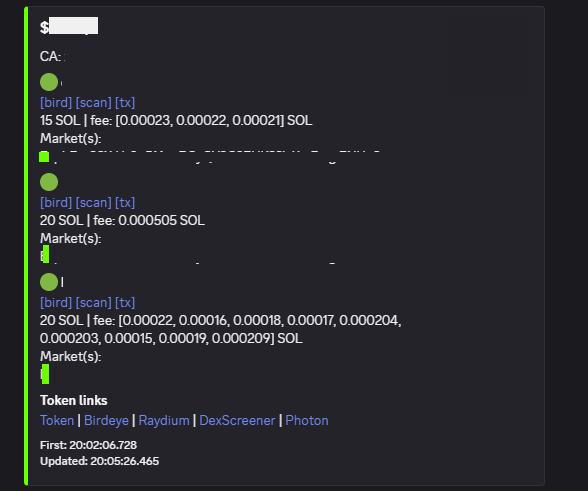
The notifications became pretty familiar. A green dot meant a wallet was actively spamming. If it stopped, the dot would turn red. If the wallet landed the trade, it changed into a money bag emoji. Most of the time I knew something was happening before I even knew what the token was.
That worked well for quite a while. We hit a lot of launches, took the scalp and moved on to the next one.
There was also a funny downside to playing the game that way. Sometimes I would make a few hundred or a few thousand dollars on a token, close the position and forget about it. Months later I would see the same token trading at a $50 million or $100 million market cap and work out that the position I sold would have been worth seven figures.
It was annoying to look back at, but holding was never really the game. The edge was getting in early, taking the trade and moving on before the next launch.

The Presale Meta
Then BOME happened.
Its success kicked off a new presale meta almost overnight. Projects were suddenly raising thousands, sometimes tens of thousands, of SOL before their tokens had even launched.
One of the first big presales I went after was SLERF. It had raised around 50,000 SOL, but just before launch the developer accidentally burned the entire allocation that was supposed to go to presale buyers. Half the supply was effectively gone, there were no presale tokens ready to dump, and the story started going viral in real time.
What should probably have killed the project instead turned it into one of the biggest launches on Solana.
SLERF became my first six-figure trade.
Even after doing well on it, I came away more annoyed about how I had executed the actual snipe than excited about the result. I knew I had left a lot on the table.
I spent the next few days going through what had happened, looking at who landed ahead of me and trying to work out why.
The answer was scale.
I needed more nodes, more bots and more capital attacking the same launch. It took me straight back to sneakers. If one setup worked, you did not just run it once. You multiplied it as aggressively as you could.
The numbers were now much bigger, but the game was starting to feel very familiar again.
As more money started flowing into these presales, the potential returns became enormous, but so did the competition. You were competing against people like Naseem and Slippage, as well as the bot and node developers themselves, who had access to effectively unlimited amounts of their own infrastructure.
Eventually, the answer was to stop competing alone.
Botters started pooling together, combining nodes, bots and capital into much larger setups. Slippage and his team were doing the same, pooling funds from people who wanted access. Some of these pools could have 20 or more people going into a single launch, then splitting the position, profits and fees between everyone involved.
The fees were a big part of why pooling made sense. A lot of these presales did not have an exact launch time. You knew the token was coming, but not exactly when the developer would make it tradable, so everyone would start spamming transactions and wait.
Sometimes the developer would launch quickly. Other times you could be sitting there for hours with ten setups continuously firing transactions, burning money while waiting for one of them to land.
On the biggest launches, five or even six figures could be spent on fees before anyone had bought a single token.
It sounds ridiculous, but when being one of the first transactions could be worth multiples of that, it made sense. At that point the game had become an arms race, and pooling allowed us to push the scale much further than any one person reasonably could.
I eventually found a group of around 7 to 10 people through DeezNode and we started pooling our infrastructure together for the bigger launches. A few of them had come from the sneaker space too.
One of the more interesting parts was how we managed to scale the setup. At the time, PepperMints was trading for around $60,000 to $70,000 and a DeezNode could be worth close to $100,000. Simply duplicating the full setup over and over became extremely expensive.
The general assumption was that each DeezNode effectively needed its own authenticated connection and separate PepperMints setup. One of the developers in our group figured out a much better way to do it.
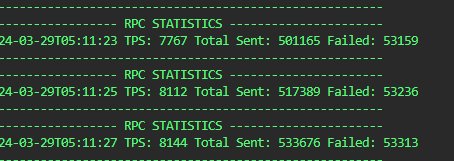
He built a forwarding server that sat between PepperMints and the RPC. Instead of connecting PepperMints directly to a DeezNode RPC, we pointed it at the forwarding server. That server could then be authenticated with our different DeezNodes and forward the requests through them.
In practice, it meant multiple people's DeezNodes could all be used through a single PepperMints setup.
That allowed the 7 to 10 of us to combine a huge amount of infrastructure without having to spend another $60,000 or $70,000 on PepperMints every time we wanted to add another node.
It was another example of the same lesson I had learned in sneakers. Once everyone had access to similar tools, the edge came from figuring out how to scale them better.
There was also a short period where precreates became a thing.
A few botters started deliberately tracking competing wallets and precreating their token accounts before launches. Some bots at the time expected to create that account themselves as part of the buy, so if someone had already created it, the transaction would fail.
This was not some clever optimisation. It was deliberately malicious. The entire point was to knock other botters out of a launch and make them burn huge amounts of money on failed transactions.
A few people then made the incredibly stupid decision to start doing the same thing to the bot developers and node owners themselves. Predictably, that ended badly for them. Their access was revoked, and they were effectively locked out until they paid back the fees their attacks had caused people to lose.
On some of the larger launches, groups were already burning six figures in fees, so being targeted like this could cause serious losses. It never happened to me personally, but a few people I knew got hit for six figures.
It was probably the clearest example of how hostile the competition had become. People were no longer just trying to beat each other to the first transaction. Some were actively trying to sabotage everyone else.
One of the first presales I ran with the group was ZEUS, and it was the first real test of everything we had spent hours building.
We hit first.
After all the time spent pooling nodes, configuring the forwarding setup, testing bots and figuring out how to run everything together, seeing our transaction land ahead of everyone else was probably the moment we knew the setup actually worked.
We had beaten the developers, Slippage, Naseem and the other setups we had spent weeks watching.
After spending so long trying to understand how these people were consistently getting ahead of everyone else, it felt pretty good to finally beat them ourselves.
It was an insanely successful trade, although we also learned another lesson the hard way.
We had not properly separated the wallet we were using to snipe from the wallet we were using to exit. As we started selling the position, some of our spam transactions were still landing and buying back into the token. We ended up giving back some of the PnL because we were effectively still buying while trying to sell.
It was a stupid operational mistake, but also the kind you only really discover once you are running at that scale.
Overall, the trade was still incredibly successful. More importantly, it proved that all the infrastructure and tooling we had spent so much time putting together could compete with the best setups on a live launch.
The Pump.fun Era
Eventually the presale meta wore off and people moved on. Pump.fun had already launched earlier in 2024, but around this point it started becoming the centre of the game on Solana.
Naturally, bots followed.
Instead of sitting around waiting for a known presale to launch, you could now run setups around the clock. People started AFK sniping certain developers, token names and anything else that could be turned into a signal. If a developer you were tracking launched something while you were asleep, the bot could pick it up and buy without you ever being at the computer.
There was a lot of money made doing this. Then came celebrity coins, artists launching tokens and increasingly hyped Pump.fun launches. Everyone was competing to get as much of the bonding curve as possible before everyone else.
Some of the people I had been sniping presales with went on to build their own bots during this period. Once again, a lot of the best developers had come from sneakers. One of those teams ended up building what I considered one of the best Solana bots at the time.
One of my best trades from this period was FRIC.
A friend had told me that Dric, an artist with hundreds of thousands of followers on Instagram, was likely going to release a coin. Knowing that was useful, but only if I could react instantly when he actually posted it.
So we built around that. We had an Instagram monitor, a Twitter monitor, an OCR bot and a Discord watcher. The second a contract address appeared on any of them, it would automatically get passed into the bot and start running.
FRIC launched at around 7:40 in the morning. I had not slept.
The monitor picked up the contract address and I got the first fill. I managed to fill most, if not all, of the Pump.fun curve and at one point held around 30% of the total supply, spending roughly 60 SOL including fees.
Almost immediately I was up high six figures.
Over the next few hours FRIC ran to around a $20 million market cap. I slowly sold into the move and ended up realising roughly $1.5 million in profit.
What started years earlier with monitors telling me when a pair of shoes restocked had eventually turned into monitors watching Instagram, Twitter and Discord for a contract address, then automatically sending it into a bot before I could even react myself.
I remember being in VC when someone casually said, “Oh, FRIC dropped. Did you hit?”
I looked over and realised the bot had worked. By the time I even knew the token had launched, I had already filled, and it had migrated.
From HYPE to TRUMP
The timing of FRIC ended up being pretty significant for me. Just four days later Hyperliquid had its TGE.
I moved high six figures into HYPE at around $3. At the time I did not fully understand what Hyperliquid would eventually become, or how much conviction I would go on to build in it. It was initially another opportunity I thought looked good, but over the following months it became a much bigger part of what I was doing.
Solana did not slow down in the meantime.
Next came the AI meta. AI agents and anything remotely connected to AI started launching constantly, creating another wave of opportunities for bots and snipers.
By this point, the barrier to entry had changed again. A lot of the best sniping had previously been gatekept behind expensive nodes, servers and private infrastructure. Bots like Bloom, which ran through Telegram, started making Pump.fun migration sniping competitive without needing anywhere near the same setup.
Interestingly, Bloom was also headed by people who had come out of sneaker botting. It was another example of the same developers and communities from that world eventually finding their way on-chain.
The game started shifting from who had the best infrastructure to who was willing to tip the most to get their transaction landed first.
That quickly became ridiculous. On the bigger launches, people were willing to risk burning 100 SOL in fees trying to land a position. Then it became 200. Then 300. Eventually there were launches where people were prepared to risk 500 SOL as the size of the opportunity kept getting bigger.
The tooling had become much more accessible, but that did not make the competition any less intense. It just moved the arms race somewhere else.
Then, in January 2025, TRUMP launched.
That was probably the clearest sign yet of how far this entire market had come. We had gone from sniping random developers launching coins on Raydium to the incoming President of the United States launching a memecoin on Solana.
Everyone talked afterwards about how the insiders ate on TRUMP, but from the perspective of people who were actually sniping Solana at the time, there were plenty of signs that something was coming.
Naseem, who I would probably consider the best Solana sniper of the 2023 to 2025 period, had been spamming a TRUMP token before the launch. Anyone monitoring the wallets of the top snipers could see that activity. We did not know exactly what was going to happen, but it was enough to make people pay attention.
I did not bother trying to snipe it myself. I decided I would just stay ready and see what happened.
Then TRUMP went live.
It immediately started moving at a scale that was completely different from a normal memecoin launch. I put a large amount of capital into it before Trump had even posted publicly about the token. I still do not really know why I had enough confidence to trust it at that point, but I did.
Then Trump posted it himself and instantly removed any doubt.
Instead of just holding the position, I started providing liquidity on Meteora. When my position moved out of range I would buy the tokens back, put them into another pool and keep doing it. The volume was insane and I ended up making around $1 million just from LP fees, on top of the actual profit from the position.
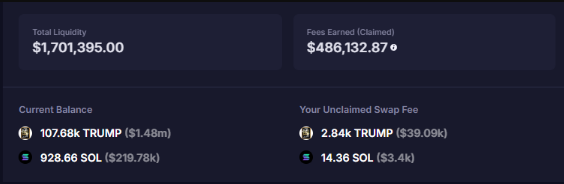
Eventually, the fees stopped being as attractive, so I stopped actively LPing and just held the TRUMP.
For some reason, while still holding a huge position with no easy way to manage it remotely, I decided to go and watch the football with some friends.
Then MELANIA launched.
I remember seeing it and immediately knowing what it meant for the TRUMP trade. I had to rush home to get access to the position. By the time I did, TRUMP had already been hit hard.
The trade was still incredibly successful, but I probably gave back 20% to 30% by not being at my computer. To make it worse, I also completely missed the MELANIA launch itself.
Live and learn.
There was obviously more after TRUMP. LIBRA, YZY and plenty of other launches followed, but that whole period became pretty cancerous for the industry, and I do not have much interest in going through all of it.
One thing that always annoyed me, though, was seeing every early wallet immediately labelled an insider.
There were absolutely real insiders in some of these launches. But there were also people who had spent the previous two years building up an enormous knowledge base around wallets, deployers, funding patterns, programs and on-chain activity. With LIBRA, YZY and others, there were signals there for people who knew what they were looking for.
That was really the whole game. Everything on Solana leaves a trail. Wallets interact, funds move, contracts get deployed and infrastructure gets prepared. If you lock in for long enough and learn what to look for, sometimes you can see something developing before the public announcement ever comes.
Of course, that knowledge did not appear overnight. It was built from years of watching the same wallets, launches and patterns every day.
Sometimes the answer really was insider information. But being early did not automatically mean you were an insider.
Knowing When to Stop
That period was basically the end of my sniping era.
There was still opportunity and plenty of money to be made, but after nearly two years of being locked in for 16 to 18 hours a day, I needed a break from all of it. I cashed a lot out into stables ready for the bear, moved money out of crypto and decided I would be ready whenever the next opportunity came around.
Maybe that is also part of why I am writing this now.
We are heading into another cycle and sniping is nowhere near as prevalent as it was during that period. There are still pockets of it. From what I have seen, people are still making five and six figures on random launches on RH and elsewhere on EVM, not as much on Solana, but the market has clearly moved much more towards social trading, which has been interesting to watch develop.
Maybe at some point another real software or botting edge appears. Something that once again rewards the people willing to obsess over the tooling, infrastructure and small details before everyone else catches on.
Sneakers had it. NFTs had it. Solana had it.
If another edge like that appears, I know I’ll end up finding it.
If you somehow made it through all of this, thank you. I have rambled for far longer than I expected and written this over the course of a few days, but hopefully it gave some insight into a part of crypto that most people only ever saw from the outside.